The Power of Slowing Down

“When you slow down, you begin to notice the life you were moving too fast to feel.”

At a Different Pace

The world still rushes but you don’t follow the same way you used to.

You walk slower, not from lack of energy, instead for appreciation and presence.

You notice things you used to pass by, your own reflection in a window is noticed and looks back at you with surprise, or a wonder, “is that me?’

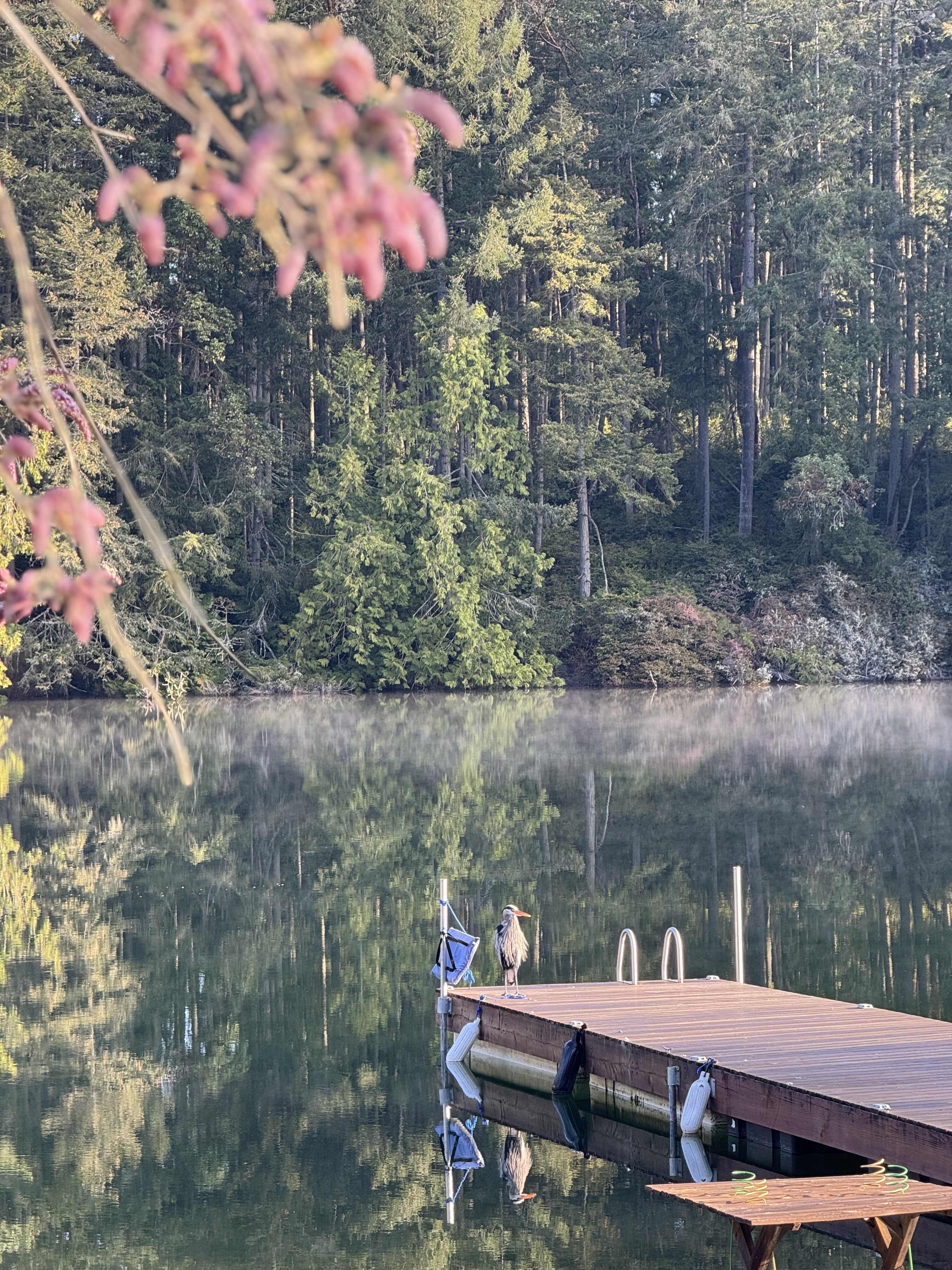
Light through a window and the sound of water is amplified.
The feeling of your own breath has time to be deliberate and purposeful.

And somehow, nothing important is missed.

Only the noise.

Reflection

Slowing down isn’t falling behind.

It’s choosing to live in a way that allows you to actually experience, “living in your life.”

Tomorrow

The surprising difference between being alone… and feeling whole.

-Kerri-Elizabeth-

A Subtle Shift

There is a cultural idea that we “deserve” indulgence.

A cheat day, a reward or something breaking routine.

But over time, many people discover something quietly profound:

The consequence doesn’t arrive in the moment, it arrives later.
In how steady or grounded you feel, or not.

And so the definition of a “treat” begins to change.

It has no deprivation attached but instead a refinement.

You start choosing what supports the life you want to feel longer term,
rather than what briefly distracts you.

A Deeper Knowing

This isnt about perfection, it is a deeper inner awareness.

You still choose differently sometimes and explore the awareness, testing it.

But you begin to understand the cost more clearly.

And with that understanding, your choices naturally shift.

Not because you have to but because you want to feel well.

Tomorrow; we’ll explore something many people quietly notice as they grow older:

Why reacting less doesn’t mean caring less, it often means understanding more.

-Kerri-Elizabeth-

The Body Remembers

“Over time, the body becomes a quiet teacher, reminding us not through rules, but through how we feel.”

The Body Remembers

There are moments, when something small
catches you off guard.

A quick reaction a rise in the chest.
A jolt of adrenaline rushing,
you thought you had outgrown.

And then you notice…

your body is speaking.

Not loudly, not harshly.

Just honestly.

Perhaps it was the extra caffeine
you didn’t really need.

A small indulgence
that once felt harmless.

Until the moment
something unexpected happened
and your system responded
faster than your calm could catch it.

And suddenly you remember…

why you chose differently.

Reflection

As we grow older, we begin to understand something in a deeper way:

Our bodies are not separate from our lives.
They are the foundation of how we experience everything.

When we are younger, we can move through imbalance more easily.

Lack of sleep, stress, sugar, caffeine and pushing beyond limits.

The body absorbs it and carries it and keeps going.

But over time, something changes.

The body becomes more precise, more responsive and more honest.

It doesn’t tolerate what it once did, not as punishment, but as communication.

What you described is not about restriction.

It is about listening.

Realizing that what once felt like a “treat”
may no longer feel like care.

And that true care begins to look different.

A calm cup of herbal tea, a long walk, a slower swim, a quiet conversation with stillness.

These begin to feel like nourishment in a way indulgence once did.

Kerri-Elizabeth-

The Quiet Answer

“The voice you are learning to trust has been with you all along.”

It was there, before the advice.

Before the explanations.

Before the noise.

A quiet voice
that said

yes
or no, and meant it, did you hear it, did you listen to it, or someone else?

Reflection

Trusting your instincts is not about rejecting the wisdom of others.

It is about recognizing the voice inside you that helps navigate your own life.

Sometimes that voice will say yes, sometimes it will say no.

Sometimes it will say maybe, and that deserves space for change.

Learning to hear the difference and giving those answers the respect they deserve, allows decisions to unfold with clarity, integrity, and trust.

And over time, that trust becomes one of the most reliable guides we have.

-Kerri-Elizabeth-

Clarity Evolves

“Understanding often arrives in layers.”

First a whisper, then a pattern.

Then a truth, too clear to ignore.

Reflection

Not all instincts arrive fully formed.

Sometimes they deepen as we sit with them.

That is why respecting the first signal matters, it gives clarity the space to mature rather than forcing it before it.

-Kerri-Elizabeth-

Tomorrow:
The final reflection: learning to trust the quiet answer.

Not Every Decision Is Collective

“Advice is valuable and ownership is essential.”

Many voices can illuminate a path.

But the step forward

belongs to one pair of feet.

Reflection

There are many decisions where collaboration and discussion are essential.

But there are also decisions that belong primarily to one person.

Knowing which is which is part of healthy relationships.

Advice can help illuminate options.

But the final answer still needs to align with the person living the outcome.

-Kerri-Elizabeth-

Tomorrow:
How patience protects clarity.

Pressure and Clarity

“Clarity grows in time, not in pressure.”

Push a river and it turns turbulent.

Leave it alone and it flows.

The mind works much the same way, listen, feel, notice something different.

Reflection

Pressure often comes from good intentions.

People see possibilities, they see timing.


They want someone they care about to benefit.

But pressure rarely produces clarity.

Instead, it can introduce an inner dam.

Anxious decisions are often made just to escape the pressure rather than because they feel right.

Respecting someone’s inner signal, even when we disagree, protects the quality of the decision itself.

-Kerri-Elizabeth-

Tomorrow:
The courage it takes to trust your own answer.

The Space Where Opportunity Appears

“What we refuse too quickly may not be meant for us and
what we accept too quickly may hide something better.”

Between decision and action, there is space.

In that space, new path can appear.

A door we hadn’t seen, a voice we hadn’t heard.

The possibility waits, in the quiet.

Reflection

When someone receives a clear inner yes or no, honoring that answer creates space.

And space has a surprising quality, it allows other opportunities to appear.

If a person is pushed past their instinctive answer too quickly, they may commit to something before the full landscape is visible.

But when the answer is respected, even if it pauses a decision, life has room to unfold.

Sometimes something even better appears.

Sometimes clarity deepens.

Either way, that pause protects the integrity of the choice.

-Kerri-Elizabeth-

Tomorrow:
Why pressure often clouds good decisions.


The Body Speaks First

“The body often answers before the mind understands.”

A breath that deepens and a step of hesitation.

A small tightening in the center of the chest says, “wait”.

The body does not argue, listen.

It simply responds, to the truth it feels.

Reflection

Much of what we call instinct is simply the body recognizing patterns before the mind has finished analyzing them.

It’s often subtle but needs attention.

A sense of ease, or slight resistance, then a calm certainty remains.

When we override those signals too often, we begin to distrust them.

And once that trust is questioned, decision-making loses instinctual knowledge.

Rebuilding that trust starts with something simple, listening.

Allow the answer that appears without immediately trying to change it.

-Kerri-Elizabeth-

Tomorrow:
Why waiting sometimes creates opportunity.

Maybe Is Its Own Language

“Maybe it is not confusion, it’s exploration.”

Maybe is a possibility of more, a doorway half open.

Light peaks in without pressure and is taken in with a subtle curiosity.

Maybe invites its own creative thinking and it will ask or invite more input if needed.

Reflection

Not every decision arrives with clarity.

Sometimes the answer is truly maybe, to find its own clarity.

Or:

I’m thinking about it, I’d like your input, let me sit with this.

Those answers invite conversation.

They welcome ideas, perspectives, and possibilities.

But they are fundamentally different from a clear yes or no.

A maybe is an open field, a yes or no is a marked boundary.

Confusion happens when people treat those signals the same way.

If someone says maybe, discussion can help.

If someone says yes or no with certainty, discussion may become pressure.

Learning to hear the difference is a quiet form of respect.

-Kerri-Elizabeth-

Tomorrow:
Why the body often knows before the mind explains.